

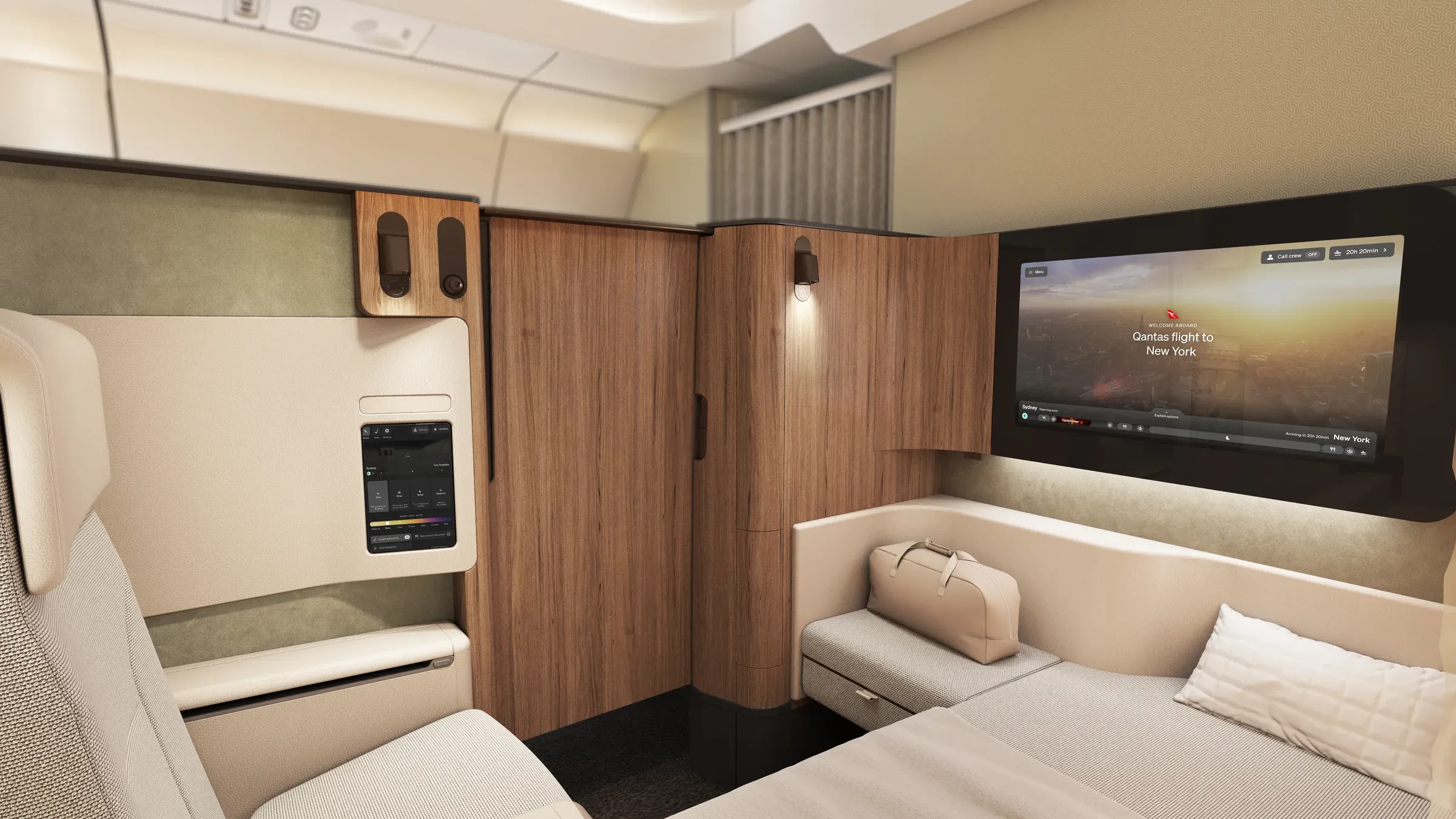
Qantas has named the second route for Project Sunrise, its programme of non-stop flights from Australia’s east coast to the other side of the world. From mid-2028, the airline will fly from Sydney to New York without a stop, the first non-stop commercial service ever between Australia and the city. The flight will take around 18 hours, roughly three hours less than today’s fastest one-stop connection, and tickets go on sale from August 2027. New York follows Sydney to London, which Qantas will launch in October 2027.
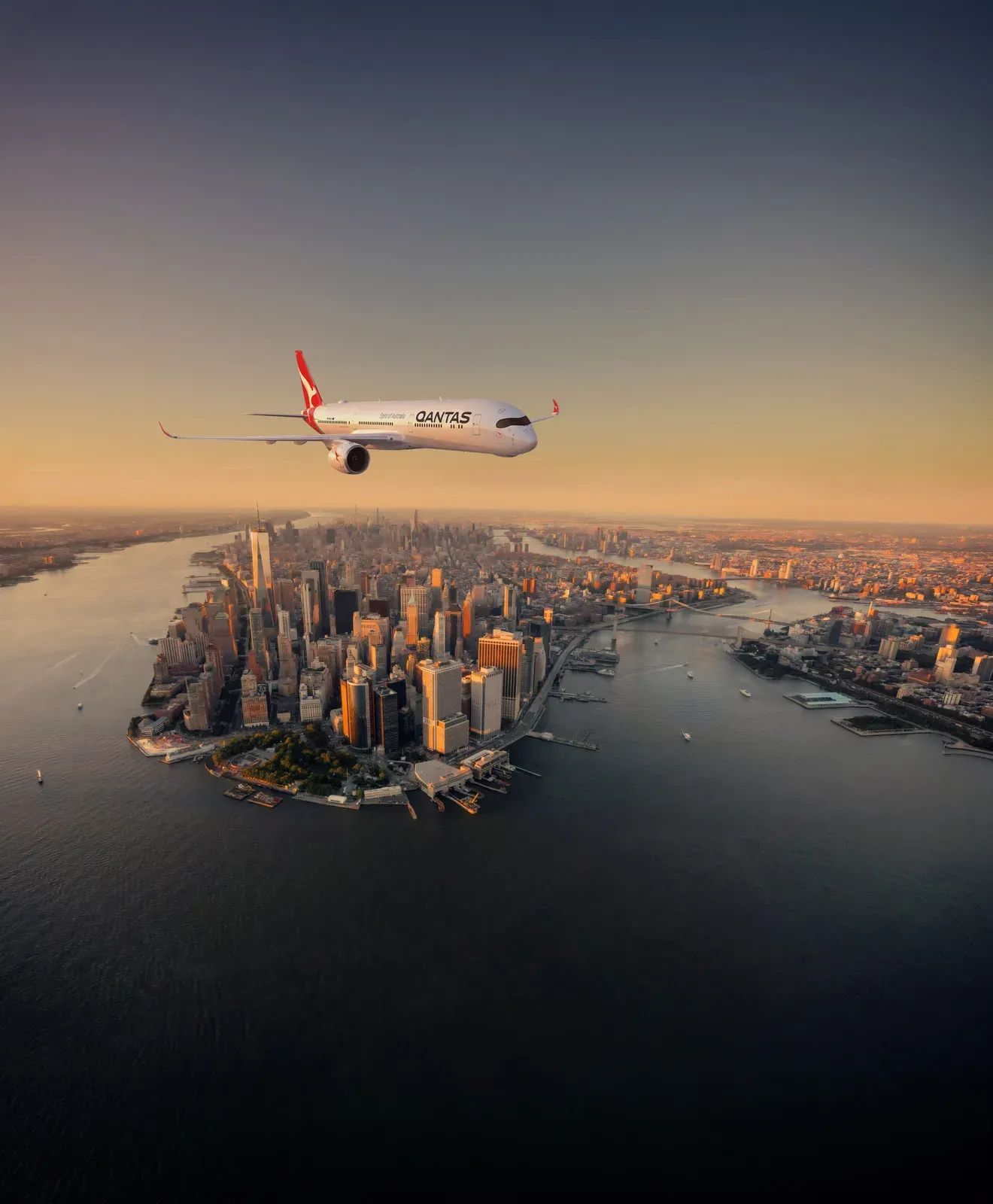
Today, Qantas flies to New York once a day via Auckland. The airline’s history on the route goes back to 1958, when its first round-the-world service reached New York from Sydney with stops in Fiji, Honolulu and San Francisco.
The aircraft: an A350 built for 22 hours
The flights will be operated by the Airbus A350-1000ULR, a version built specifically for Project Sunrise. An extra fuel tank of 20,000 litres gives it a range of more than 16,000 kilometres, enough for up to 22 hours in the air. Qantas has ordered twelve of them. The test aircraft recently flew non-stop from Melbourne to Toulouse in 24 hours and 24 minutes, a record for any commercial airliner, and the first aircraft is due to be delivered to Qantas in April 2027.
The most telling number, though, is the seat count. With just 238 seats in four cabins, Qantas says its A350-1000ULR has the lowest seat density of any A350 in the world. Every part of the cabin, from the lighting to meal times, was developed over a decade of research with the Charles Perkins Centre at the University of Sydney, with one goal: that passengers arrive feeling well after almost a day in the air.
First: six suites with a bed and an armchair
At the front are just six enclosed First suites in a 1-1-1 layout. Each one has an 80-inch flat bed and, separately, a reclining armchair, so there is no need to choose between sitting and lying down. A large table works for dining or working alone or with a companion, and there is a full-length wardrobe and plenty of storage. The mattress uses several layers of memory foam, developed after months of pressure-point testing, and the lighting in each suite can be set to follow the passenger’s body clock. A digital panel outside the suite lets guests signal discreetly to the crew.
Business: 52 suites, now with doors
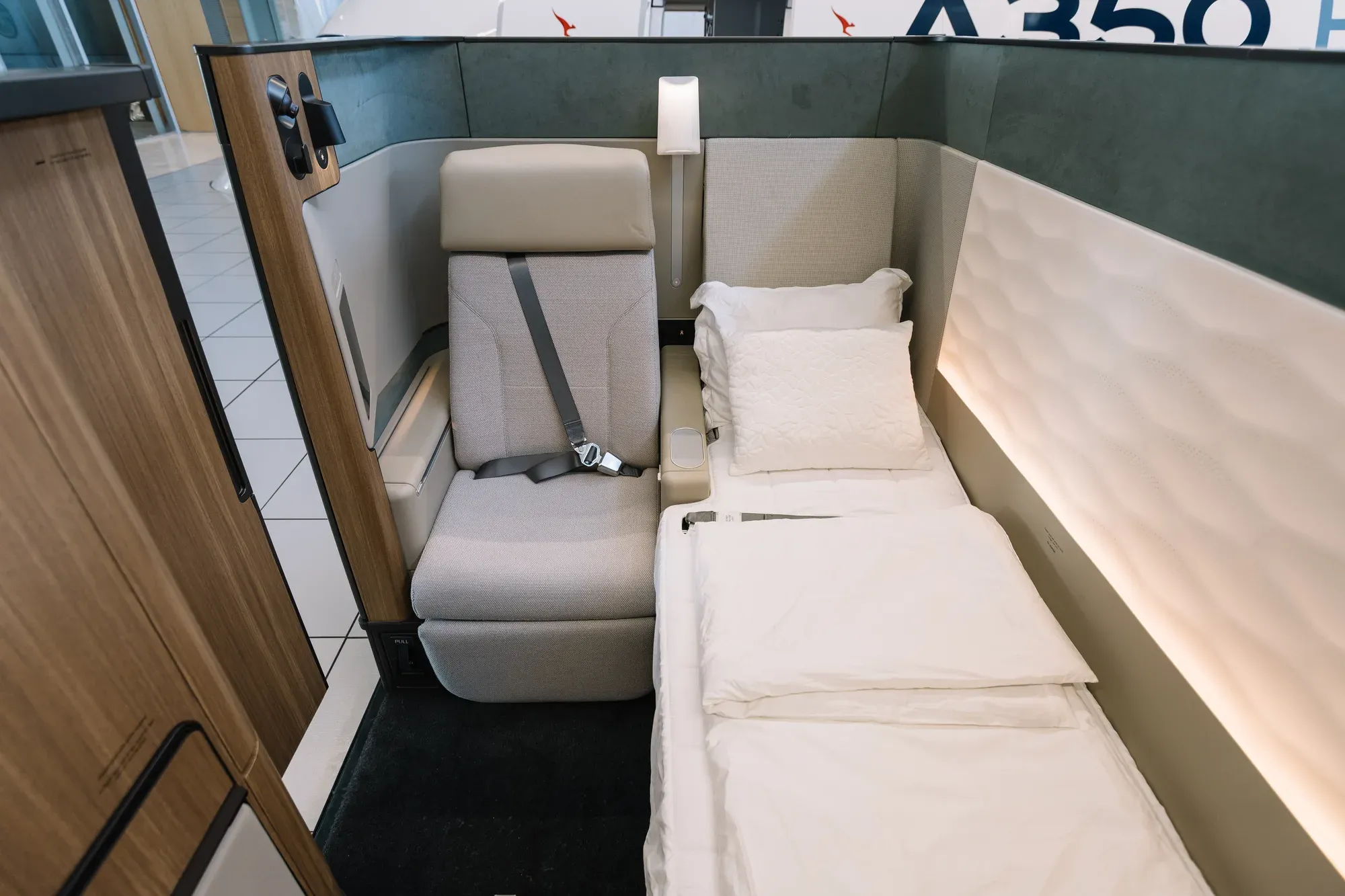
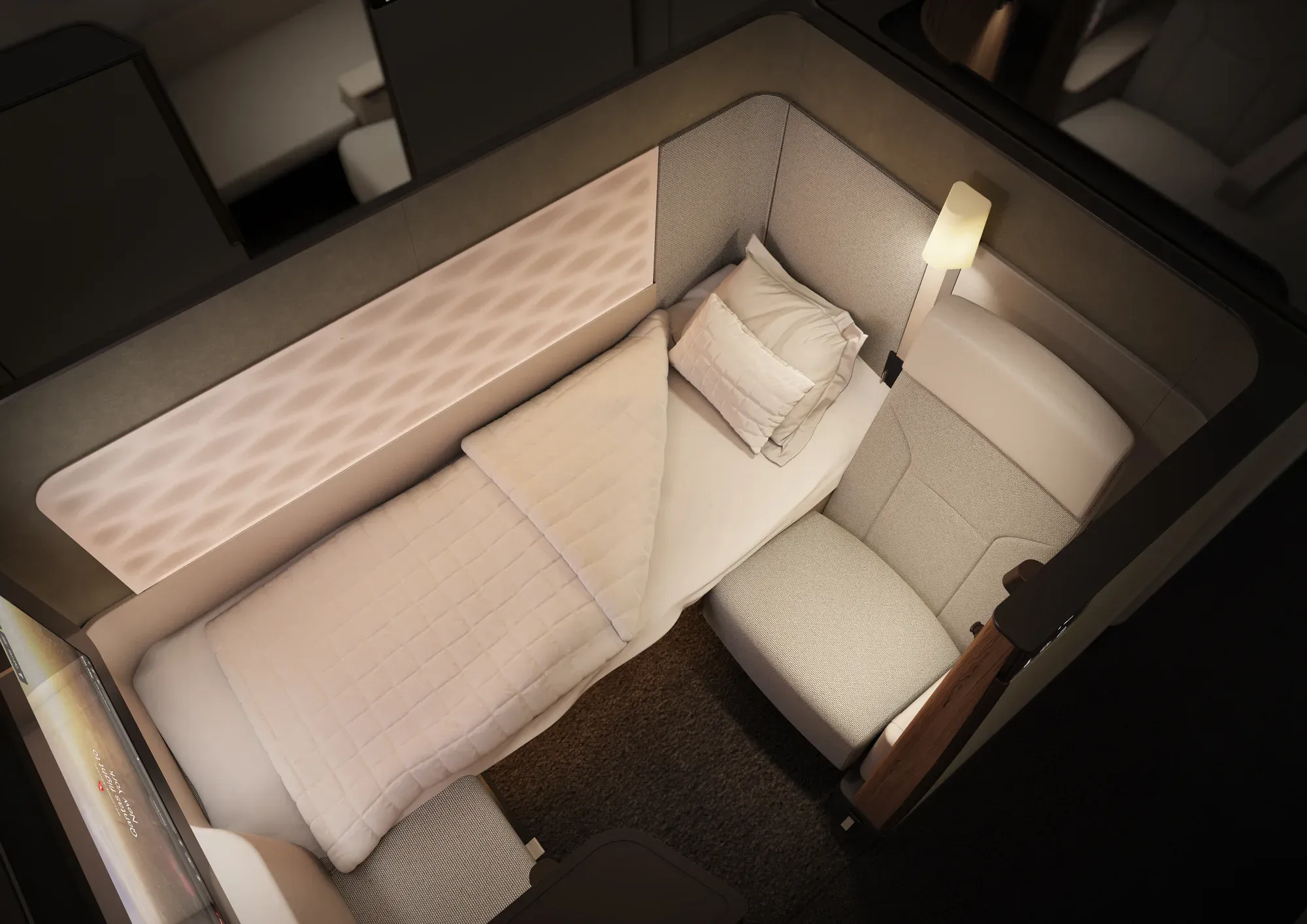
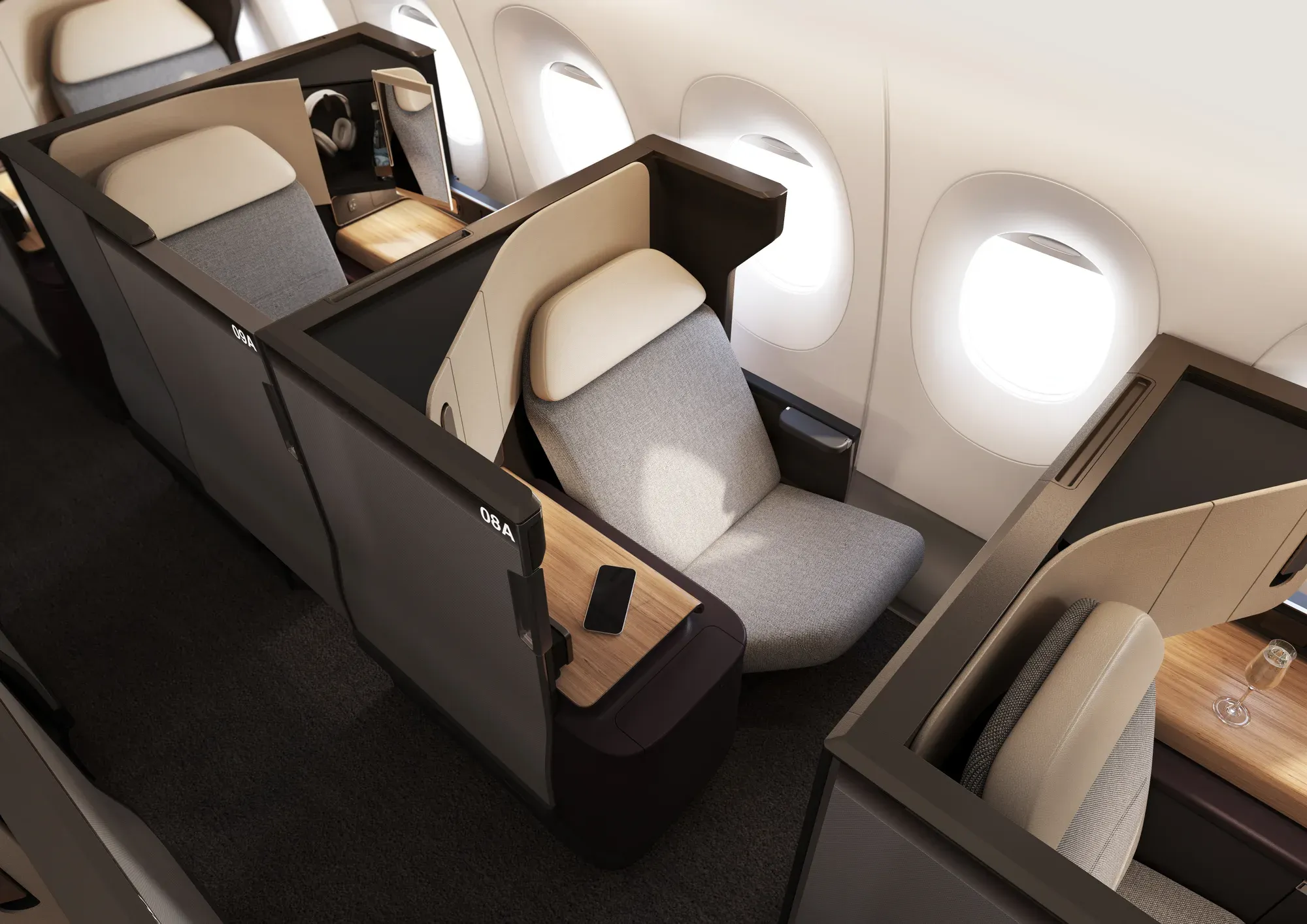
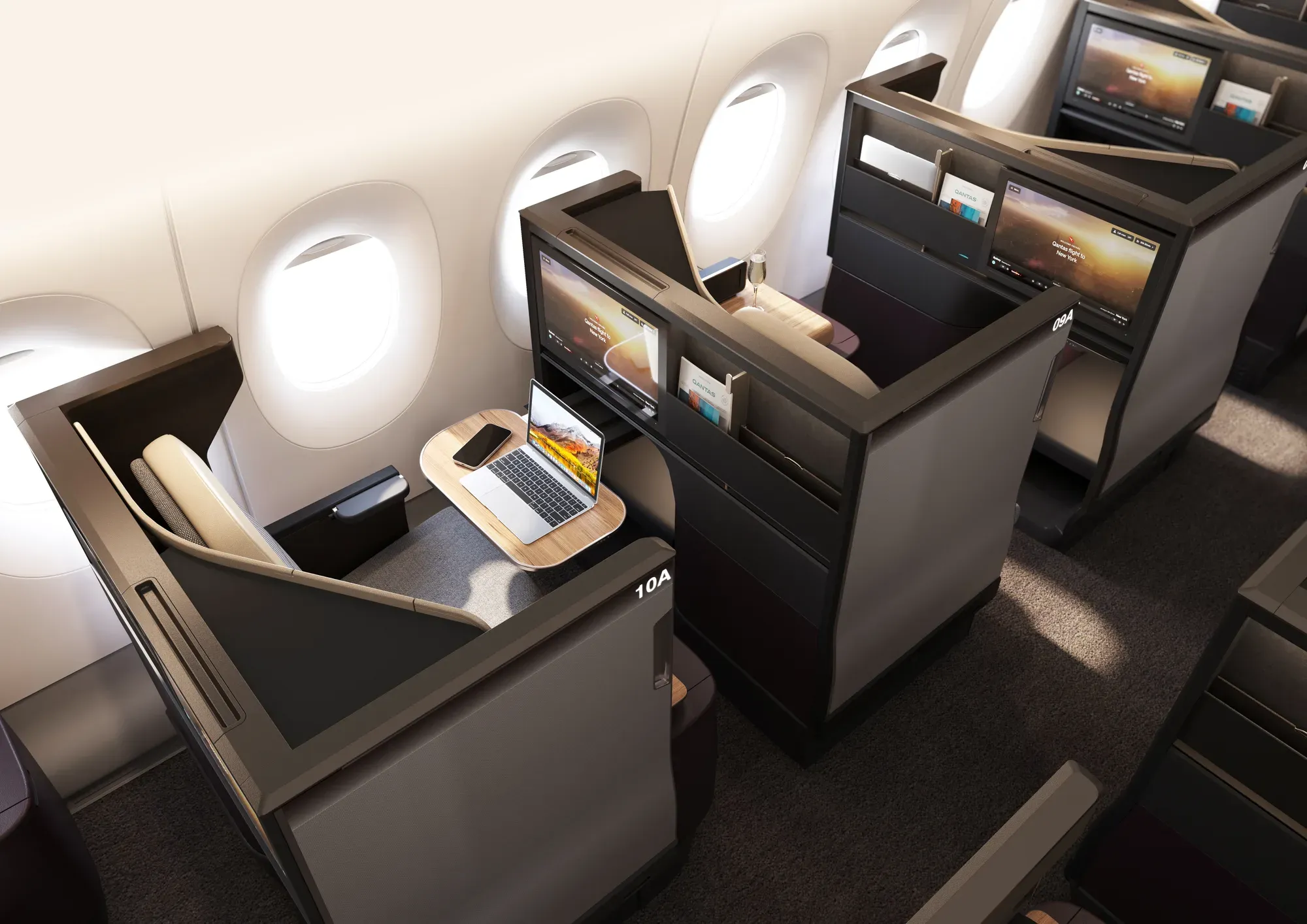
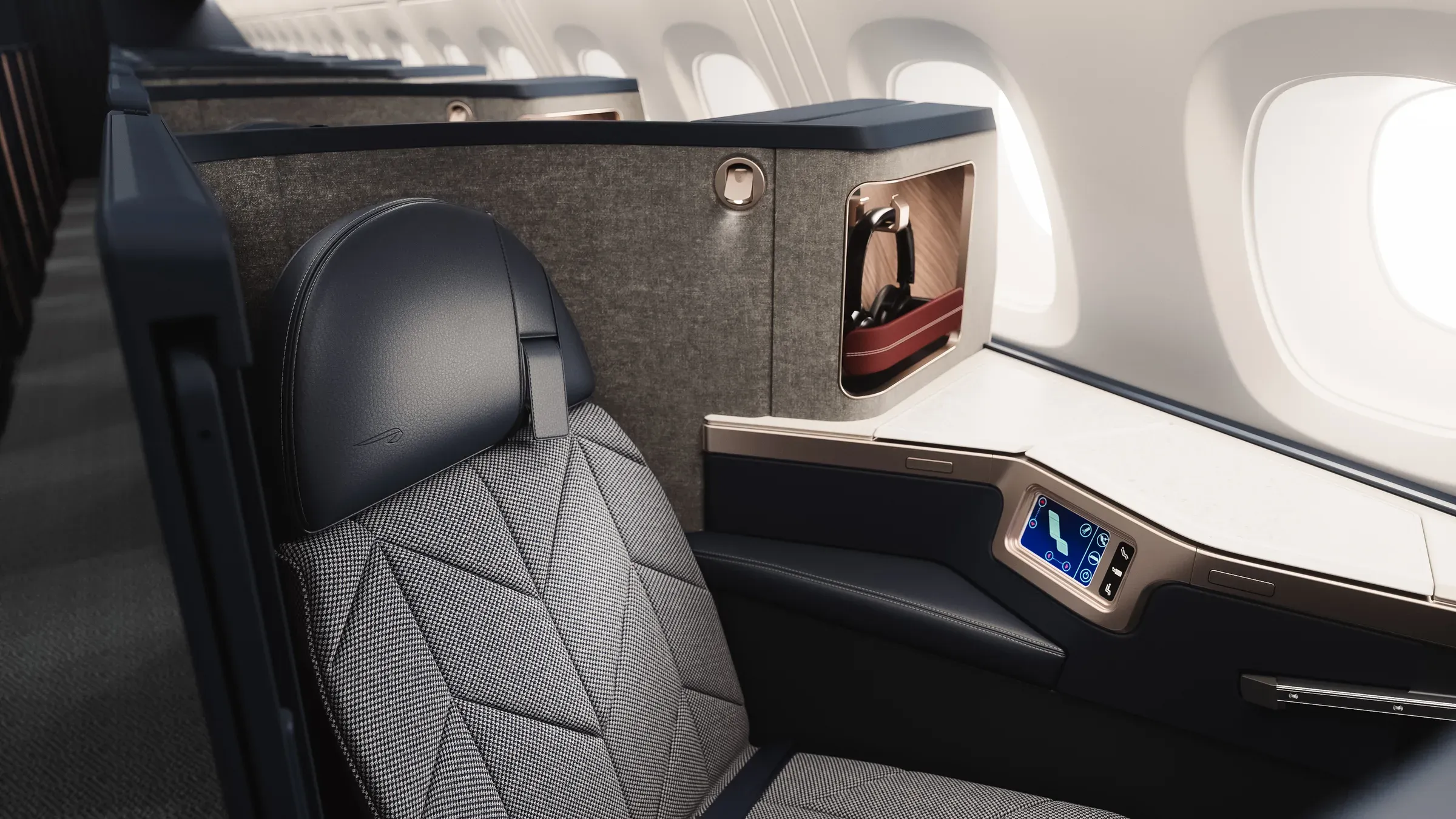
Business Class has 52 suites in a 1-2-1 layout, and for the first time at Qantas they come with a sliding door. In the centre pairs, an adjustable divider can be opened for people travelling together. Each suite has an 80-inch flat bed, a large dining table and more storage. Meals will be flexible, so that passengers can eat at the times recommended by the jet-lag research, and the cabin lighting dims gradually to ease the way to sleep.
Premium Economy, Economy and the Wellbeing Zone
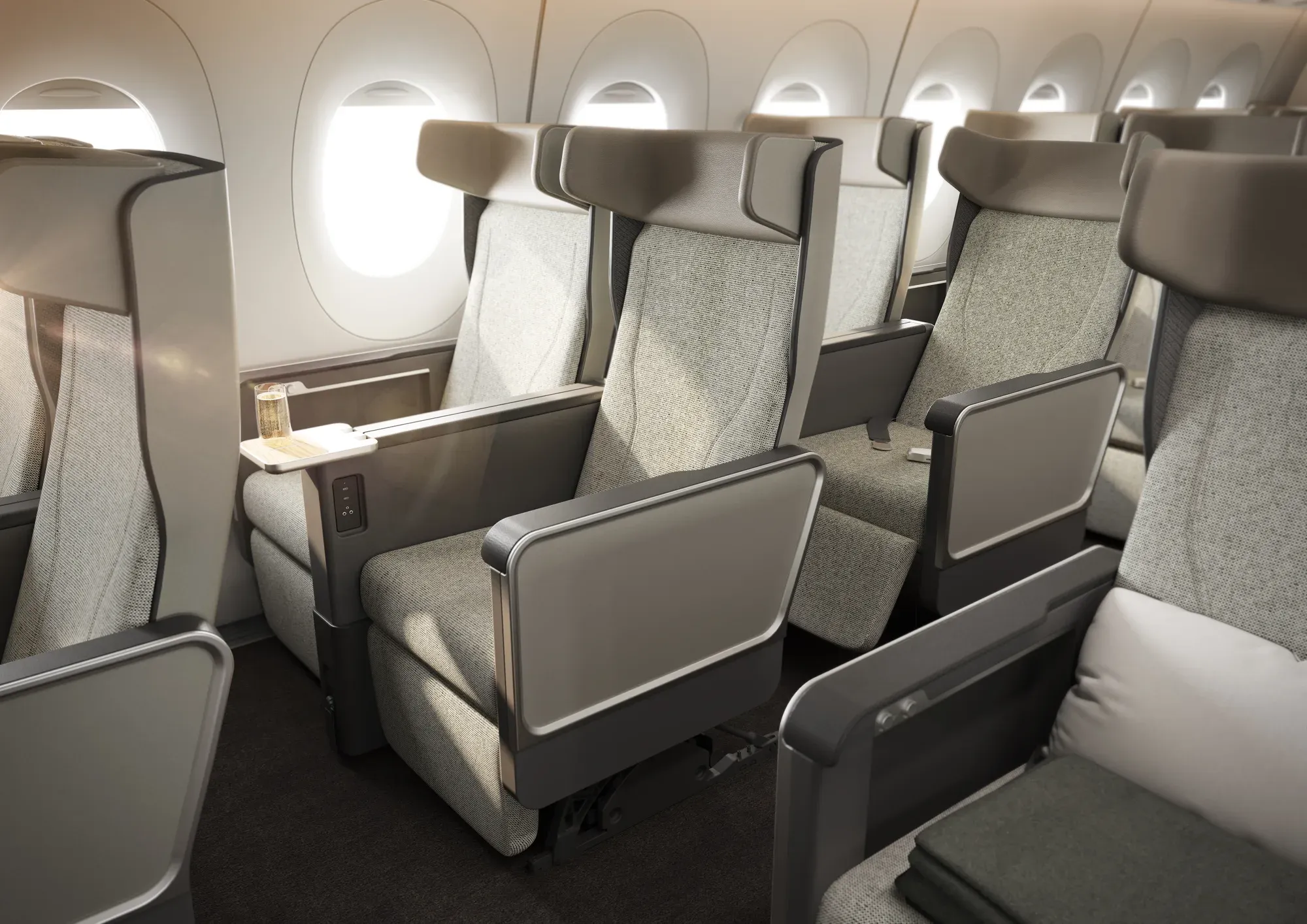
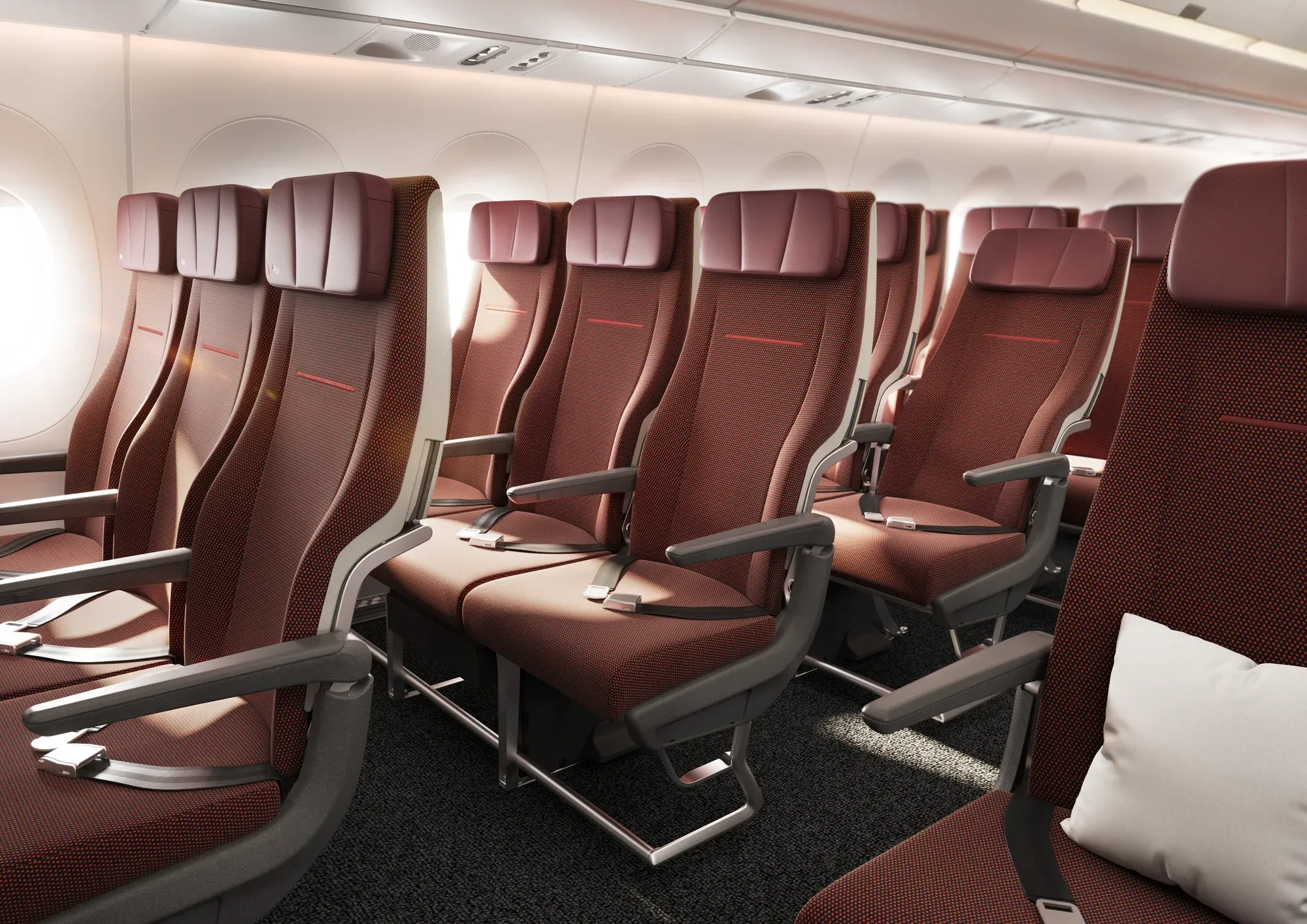
Premium Economy has 40 seats in a 2-4-2 layout, with leg and calf rests, winged headrests and what Qantas calls the most generous seat pitch on any of its aircraft. Economy has 140 seats in a 3-3-3 layout, and at the front of the cabin, 42 Economy Plus seats offer a 34-inch pitch and priority boarding.
Between Premium Economy and Economy sits what Qantas calls the world’s first purpose-built inflight Wellbeing Zone. Designed by Caon Design Office, which also shaped the rest of the cabin, it offers stretch handles built into sculpted wall panels, a guided movement programme on screen, a hydration station and snacks and drinks.
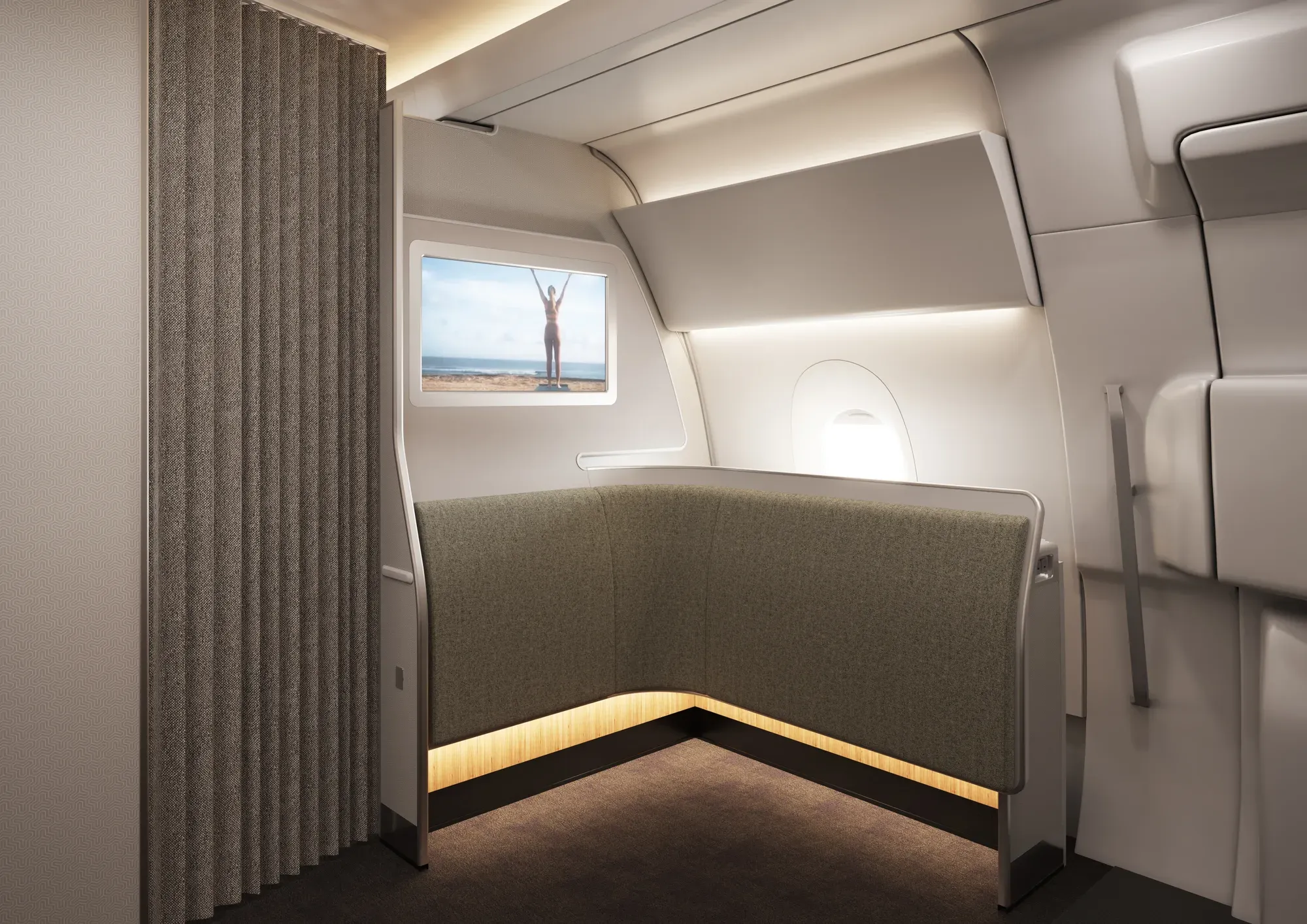
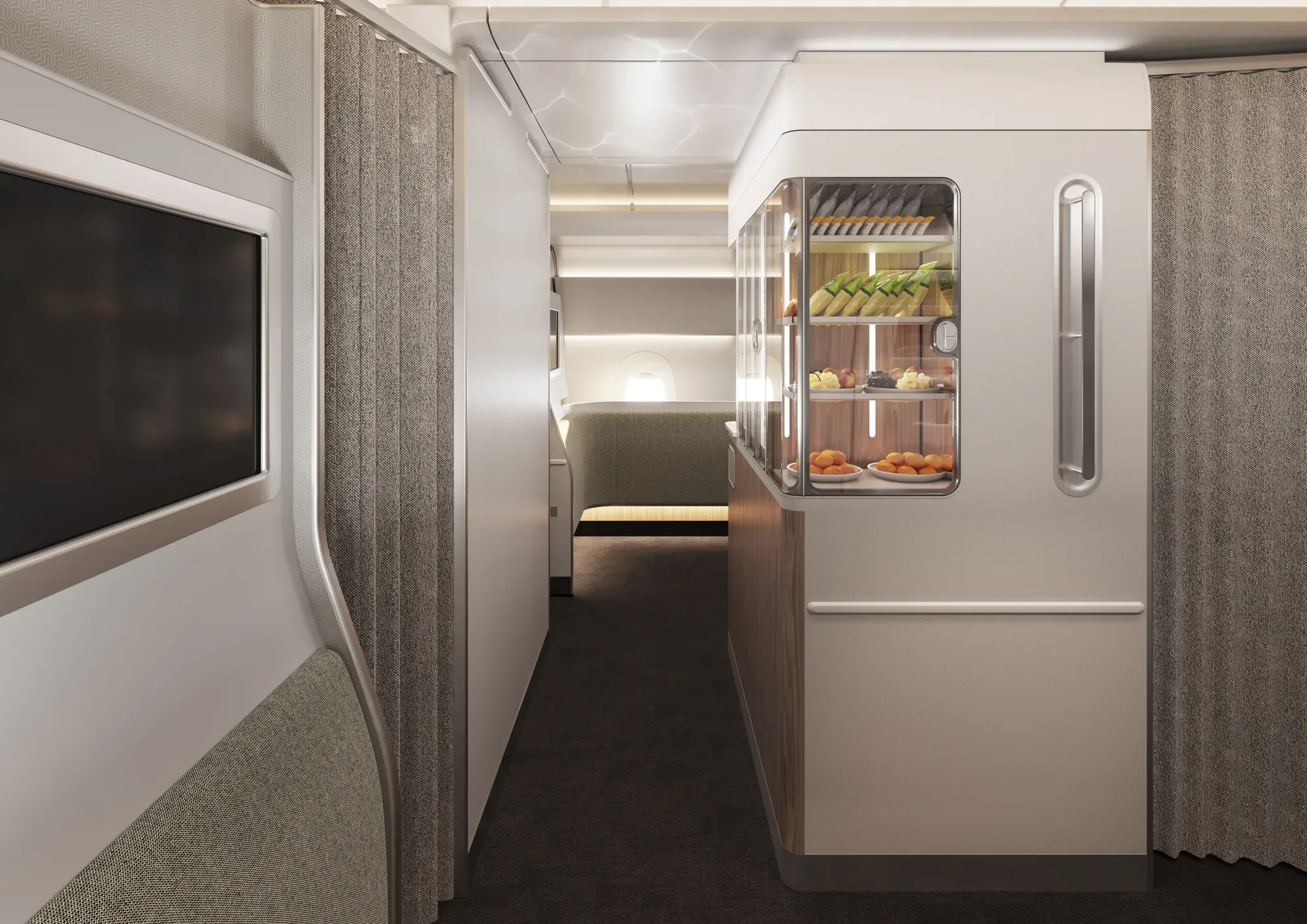
The new entertainment system includes a journey planner, linked to the cabin lighting, that shows when meals are served and when the cabin dims for rest. Wi-Fi and Bluetooth pairing are available in every cabin.
Our view
Twenty hours in a seat is only a promise if the cabin keeps it. On paper, Qantas has got the priorities right: very few seats, a First suite with both a bed and an armchair, doors in Business and real space to move around. With so few First suites per flight, those seats will not be easy to get. For comparison, read our reviews of Emirates A380 First Class and Qatar Airways A380 Business Class.

Roger Hohl
Roger Hohl has been at the helm of Luxvisor since 2006. From his base in Switzerland he travels to test what the luxury travel industry promises, from the seat at 40,000 feet to the last course of a tasting menu, and writes about it with an independent eye.

Comments