


I do not hand out praise the way most of my colleagues in this industry do — freely, breathlessly, in exchange for a free table and a nice photo. I have reviewed enough dining rooms across Luxvisor’s archive on enough continents to have earned the right to be difficult. So when I tell you that this Hamburg restaurant review comes out almost entirely in Hygge’s favour, that the Brasserie & Bar at the Landhaus Flottbek delivered one of the most quietly confident five-course dinners I have had this year, understand that this is not a sentence I write lightly.
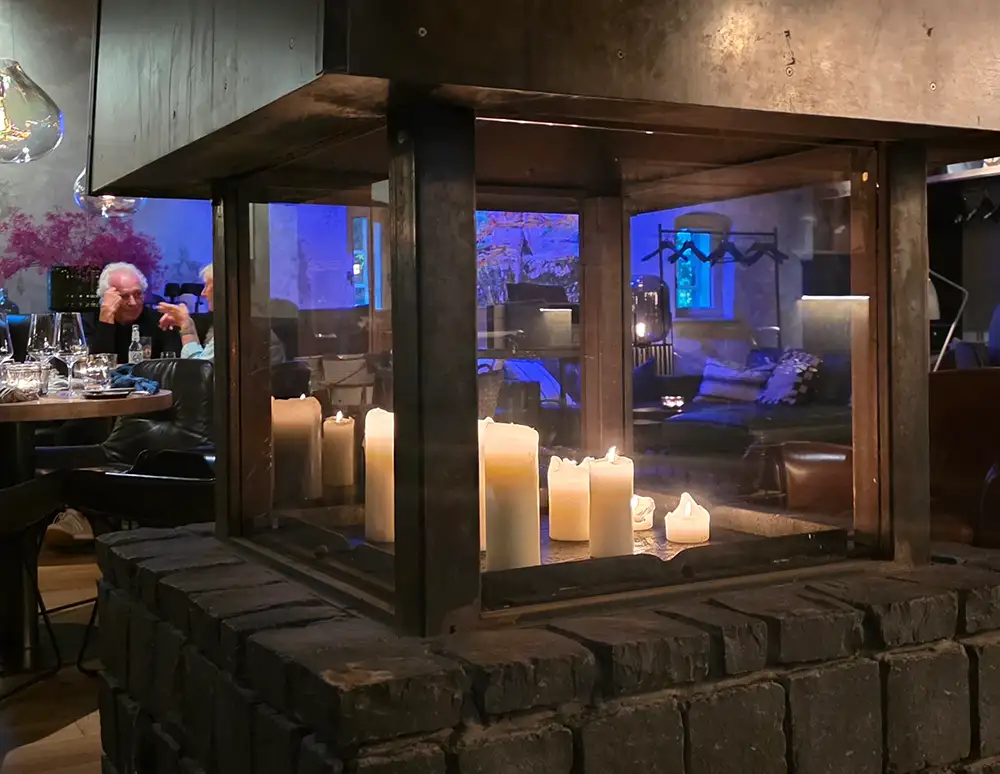
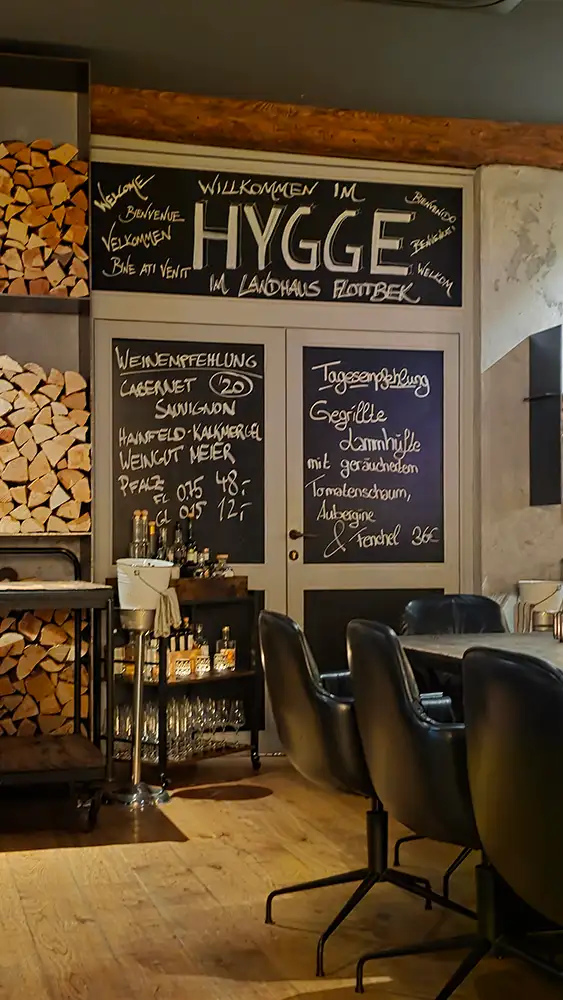
The setting alone does most of the seducing before a single plate arrives. A converted country house, all exposed oak beams and stacked firewood, Edison bulbs dangling like punctuation marks from the rafters, a chalkboard by the door welcoming guests in half a dozen languages under the word HYGGE, hand-lettered and unbothered by symmetry. It is the kind of room that could easily tip into rustic cliché and instead lands, deliberately, on something closer to what the Danish word actually means: unforced comfort, engineered by people who clearly know what they are doing. Landhaus Flottbek itself is worth the trip out to this corner of the city on its own merits, the restaurant is simply the reason you stay for dinner.
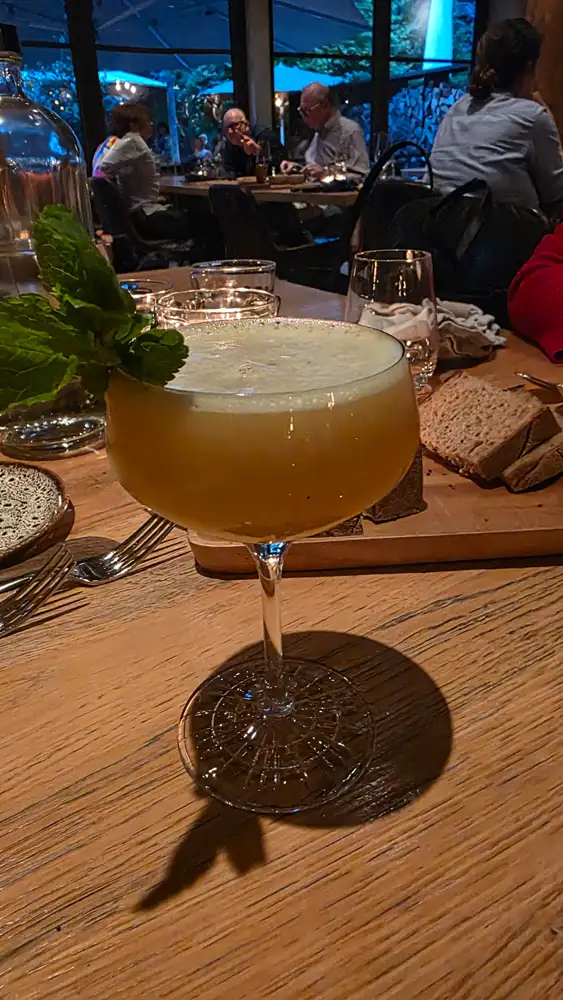
I started, as I tend to when I am working, without alcohol, a Young Cuban, alcohol-free, and one of the more intelligent non-drinking cocktails I have been served on the Continent this year. Whoever built that drink understood that “alcohol-free” is not a synonym for “an afterthought squeezed from a soda gun.” It had structure, a little heat, a herbal lift from the mint garnish, and it did the one thing a pre-dinner drink is supposed to do: it made me curious about what was coming next. From there I switched, unglamorously and entirely by choice, to Apfelschorle for the rest of the evening, the correct beverage, in my view, for a five-course tasting menu that demands you keep your palate honest between courses rather than anaesthetised.
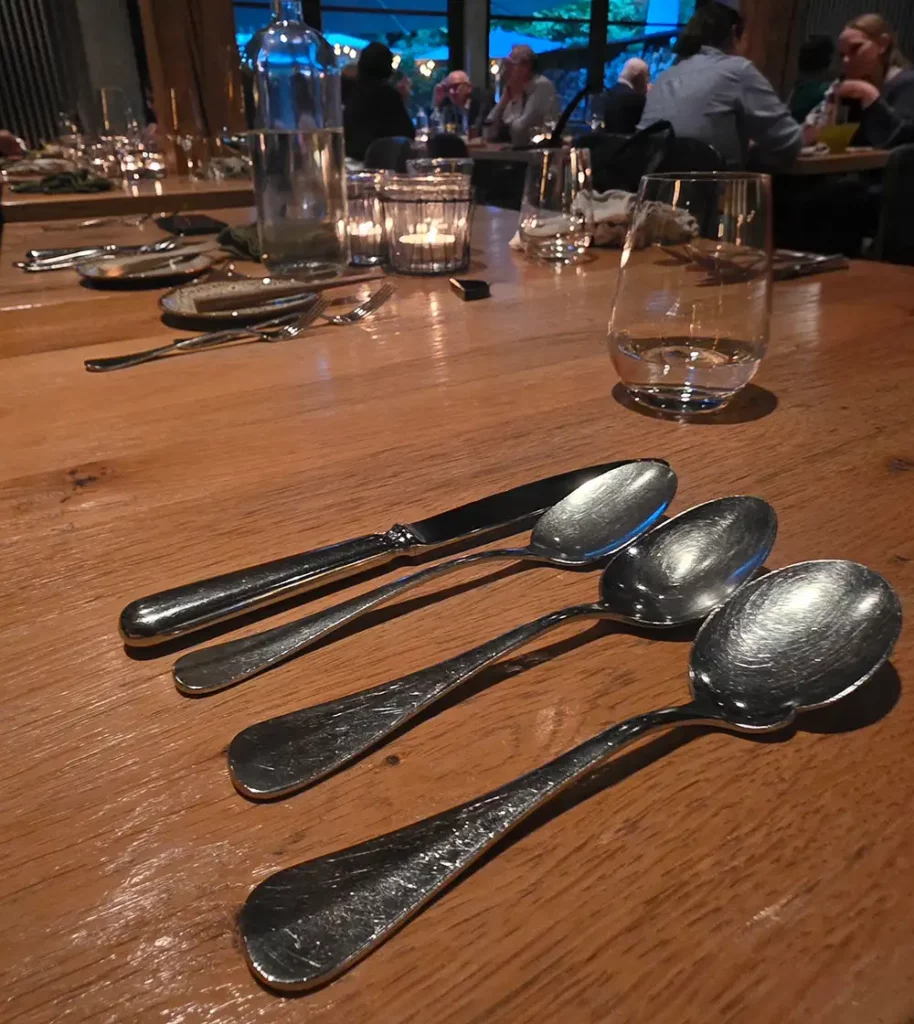
The kitchen sent out its bread first, a dark, properly fermented sourdough with a shatter-crisp crust, alongside a mound of cultured butter that had clearly not come out of a catering tub. I ate more of it than I should have, which I say as a compliment and as a warning to anyone with five courses still ahead of them.

Course One: The Crudo
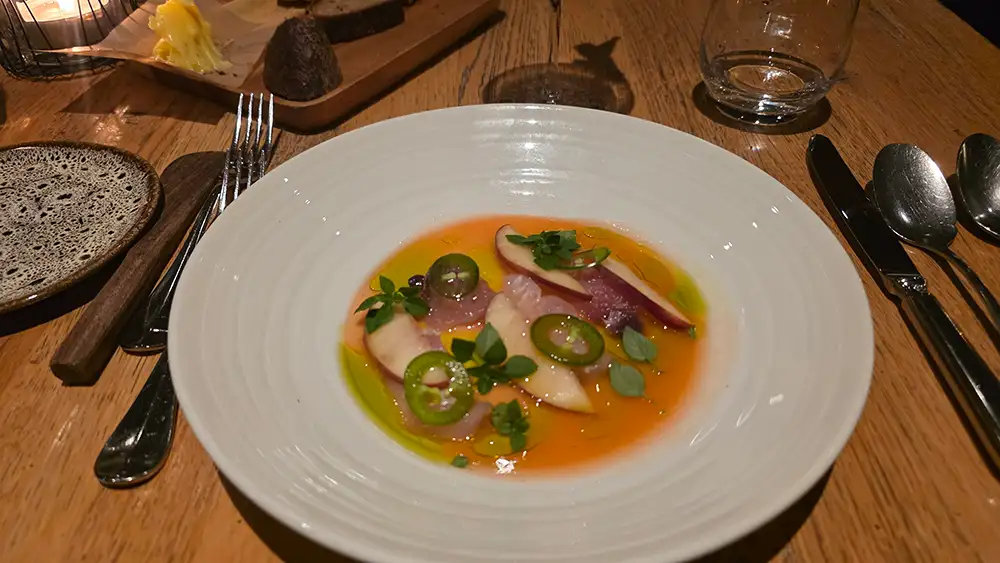
The tasting menu opened with a crudo, delicate, almost translucent slices of a lean white fish laid over a tangerine-bright broth, with slivers of green apple and jalapeño doing exactly what they were there to do: cut through the richness of the oil without shouting about it. Clean, confident, a little playful. A kitchen announcing its intentions.
Course Two: The Mushroom Consommé
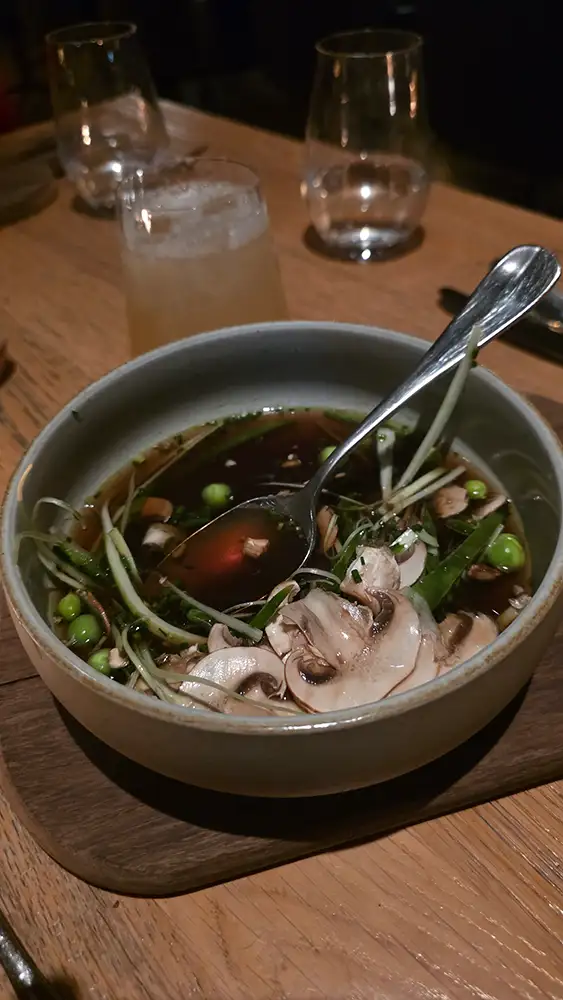
The evening’s most theatrical bowl arrived next: a wild mushroom consommé, dark and deeply savoury, poured tableside over raw mushroom slices, spring peas, snow peas and a thicket of fine herbs that wilted into the broth the moment the liquid hit them. It is a simple idea, clear broth, good vegetables, restraint, executed with the kind of precision that only looks effortless because someone spent a very long time reducing something in the kitchen.
Course Three: The Saibling, Not the Pulpo
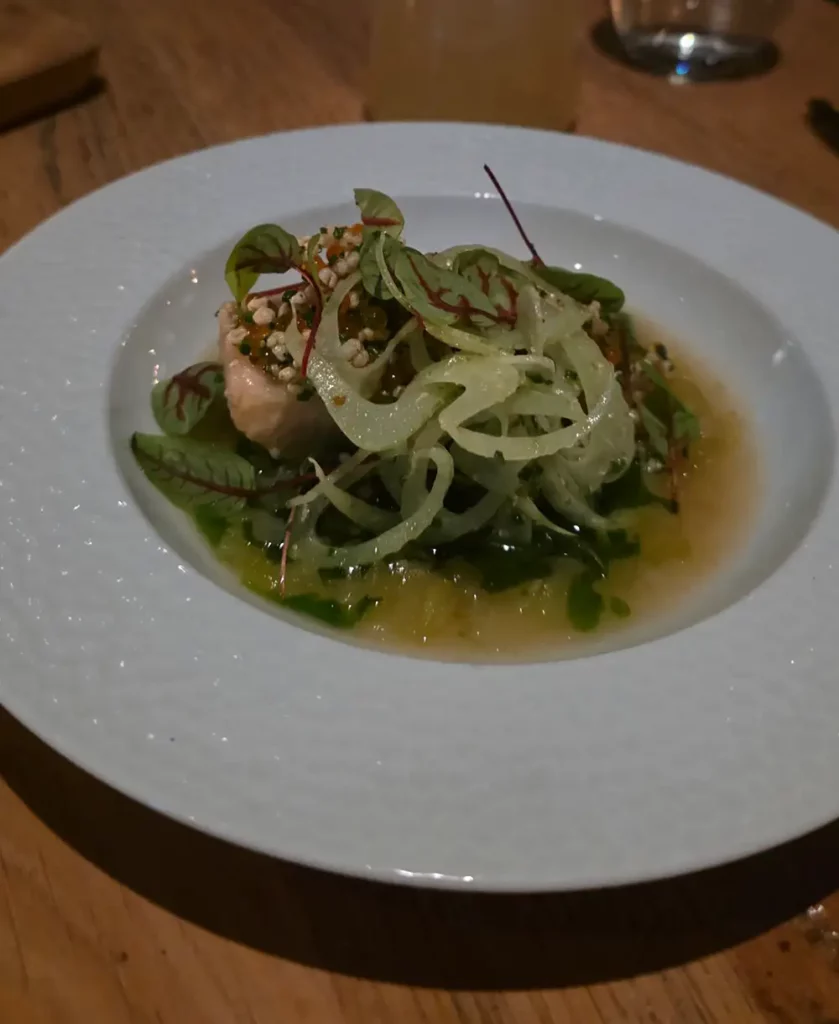
This is where I made a point of exercising the one privilege I insist on wherever I dine: I do not do octopus, and I said so. Pulpo was on the menu; I asked, instead, for the Saibling, the Arctic char, also listed, and the request was accepted without so much as a raised eyebrow from the floor. That kind of unbothered flexibility tells you more about a kitchen’s confidence than any tasting menu ever could. What arrived more than justified the substitution: the char, pale and delicately cooked, sat under a tangle of shaved fennel, beads of trout roe, a scatter of puffed grains and blood orange, the whole thing balanced somewhere between a salad and a fish course and entirely at ease being both.
Course Four: The One I Keep Thinking About
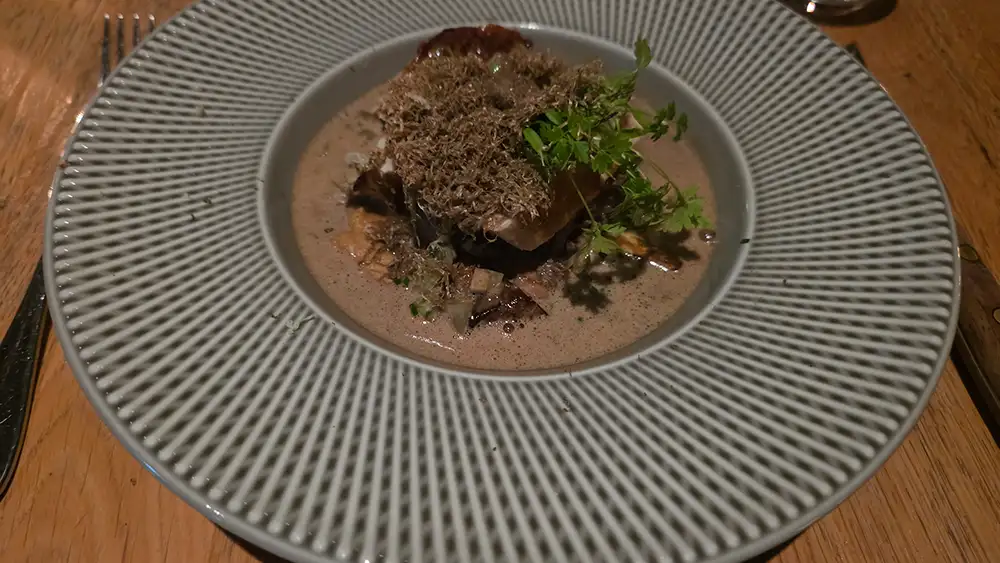
A single, burnished piece of protein (chicken), its skin the colour of good varnish, set into a mushroom velouté that had been whipped into a foam and crowned with an almost absurd, gravity-defying nest of impossibly fine crisped shavings and fresh chervil. It read as playful on the plate and tasted entirely serious, deep, earthy, precisely seasoned, the kind of course that makes you put your cutlery down for a second longer than necessary.
Course Five: Dessert, Restrained
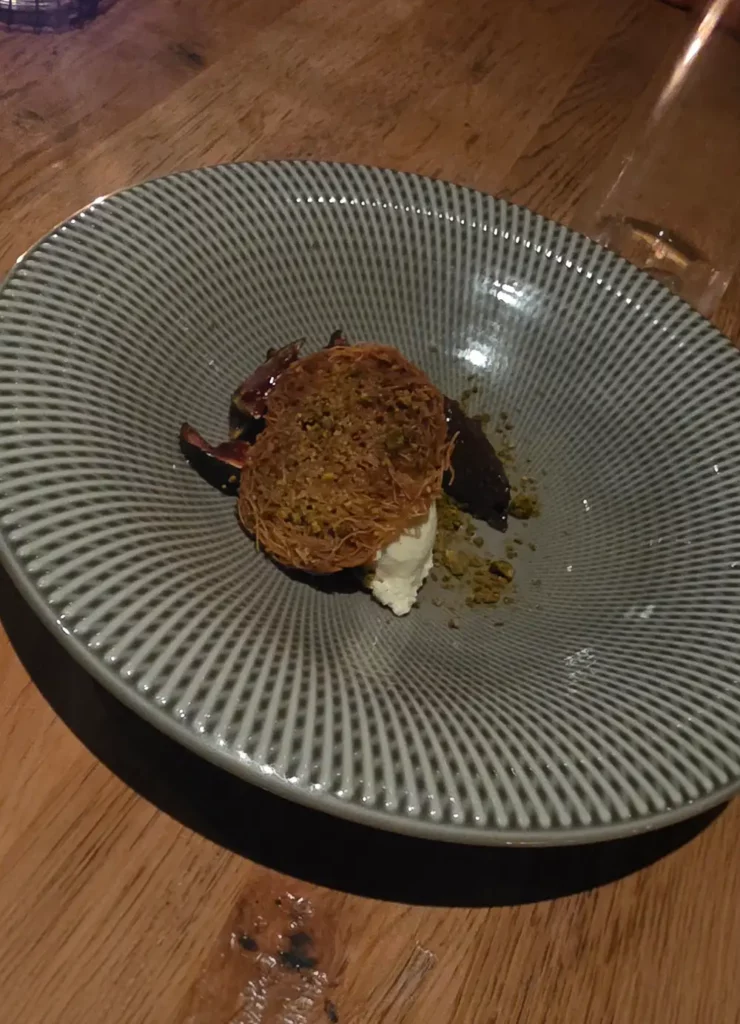
Dessert resisted the usual sugar-bomb instinct that ruins so many tasting menus at the finish line. Roasted figs, a crisp pistachio-kataifi nest, a quenelle of something cool and lightly tangy underneath. Restrained, seasonal, correctly sweet rather than aggressively sweet, exactly how I like to be sent out the door.
By the time the last spoon was set down, the candles had burned lower, the dining room around me had filled and emptied twice over, and I had long since stopped taking notes and simply started eating, which, for anyone who knows how I usually work a table, is the only review score that actually matters. Nobody rushed me, nobody hovered, and nobody seemed remotely bothered that I had spent the better part of two hours quietly rewriting their menu.
Service throughout was warm without being needy, attentive without hovering, and entirely unfazed by a guest who rewrites his own menu mid-meal. That, more than any single course, is what separates a good restaurant from a merely photogenic one.