

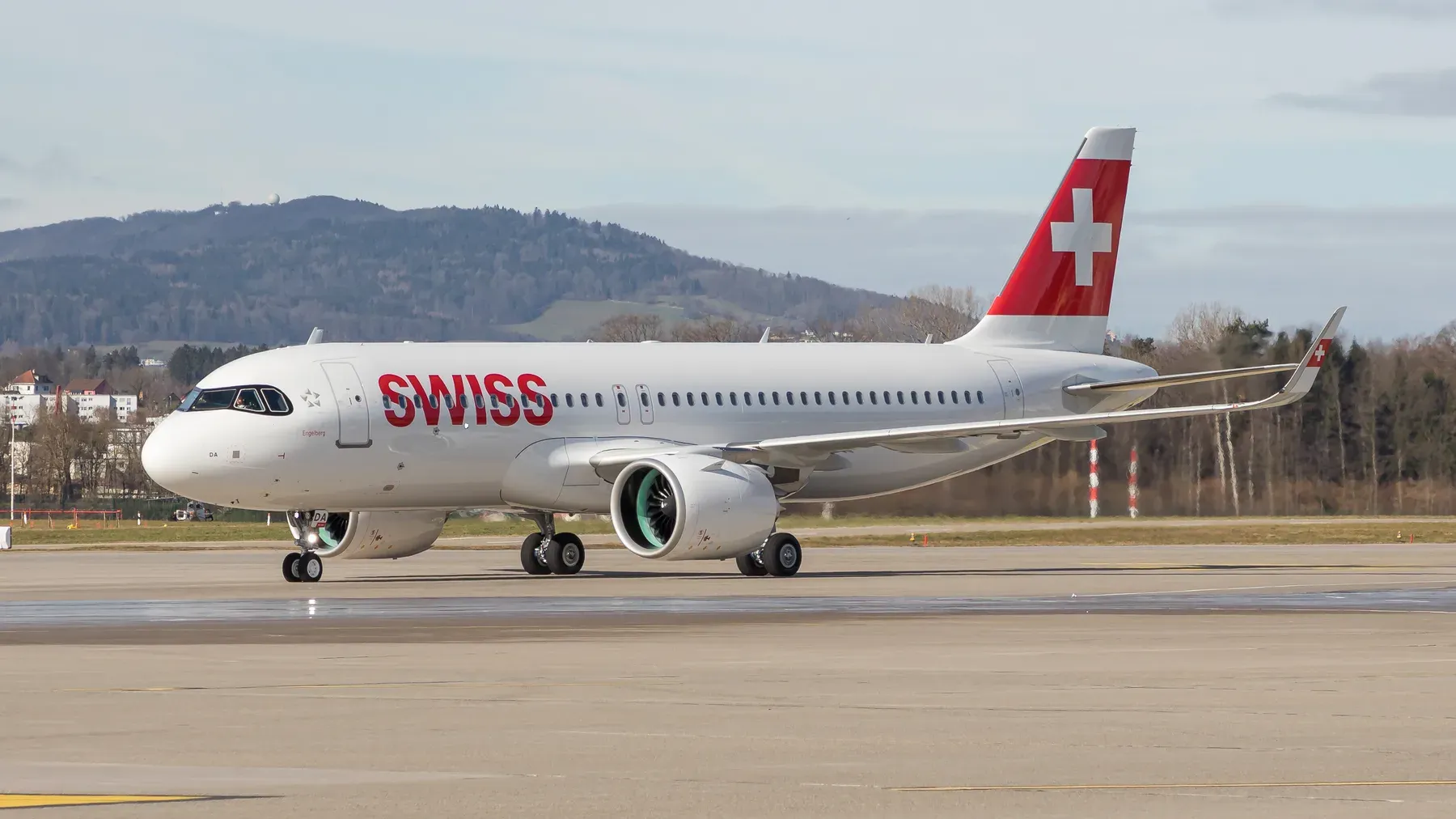
If you have booked a SWISS flight within Europe over the past few years, there was a fair chance that the aircraft at the gate did not belong to SWISS at all. That is about to change. From the summer 2027 schedule, Swiss International Air Lines will operate clearly more of its flights with its own aircraft and its own crews, and it will rely less on planes and crews hired in from other airlines.
The numbers are significant. Instead of 26 aircraft flying for SWISS under so-called wet-lease agreements, there will be only around 18 next summer. Part of the gap is closed by additional Airbus A320s that SWISS will operate itself again.
Why SWISS had to borrow aircraft
In a wet lease, a partner airline provides the aircraft together with its crew, maintenance and insurance, while the flight is sold and operated under the SWISS flight number. For SWISS, this was a way to keep its schedule stable when its own resources were short. The airline names three reasons: the well-known shortage of Pratt & Whitney engines, which kept parts of its fleet on the ground, additional training requirements, and a tight supply of pilots.
According to SWISS, all three are now easing. More engines are available again and the staffing situation in the cockpit is improving, which allows the airline to take back more flying.
CEO Jens Fehlinger calls it a big step. “We set out to fly more ourselves again, and that is exactly what we are now doing,” he says. Up to eight fewer wet-lease aircraft will fly for SWISS next summer than this year, which, as he points out, requires the right operational conditions, enough crews and careful planning.
airBaltic leaves, Helvetic stays
With fewer aircraft needed, SWISS is also cutting the number of partners. The cooperation with airBaltic ends with the 2026/27 winter schedule, at the end of March 2027. SWISS credits the Latvian airline with reliable support in a demanding phase, when the engine problems put pressure on its European network.
Helvetic Airways, on the other hand, becomes even more important. SWISS will expand its long-standing partnership with the Zurich-based airline, which gives it reliable planning, operational stability and the flexibility to cover seasonal peaks and short-term needs.
What it means for Business Class passengers
We have flown both partners in SWISS Business Class, and the difference to the SWISS original was always noticeable, if not always for the worse. On the airBaltic Airbus A220-300 to Hamburg in 2024, the Latvian crew and the Swiss catering made for a solid 3.9. A year later, on the same aircraft type to Budapest, airBaltic improved to 4.1 and proved a worthy ambassador for the SWISS brand. Those flights are now numbered.
Helvetic is a more mixed story. Its Embraer E2 jets are modern and quiet, but the cabins have let it down: the E190-E2 from Hamburg to Zurich scored 3.6 with a tired cabin, and our recent re-test on the E195-E2 found the panels cleaner, but still not clean, for a 3.7. If Helvetic is to carry more SWISS passengers, that is the first thing it should fix.
The best news is the return of SWISS’s own aircraft. Our highest scores between Zurich and Hamburg went to SWISS itself: 4.2 for the A320neo and 4.2 for the A321neo, with a good seat, Tête de Moine on the tray and a calm cabin. The older A321 on the same route came to 3.9. More SWISS aircraft and crews means more of the product that won SWISS the title of Europe’s Leading Business Class at the World Travel Awards 2026.

Roger Hohl
Roger Hohl has been at the helm of Luxvisor since 2006. From his base in Switzerland he travels to test what the luxury travel industry promises, from the seat at 40,000 feet to the last course of a tasting menu, and writes about it with an independent eye.



Comments